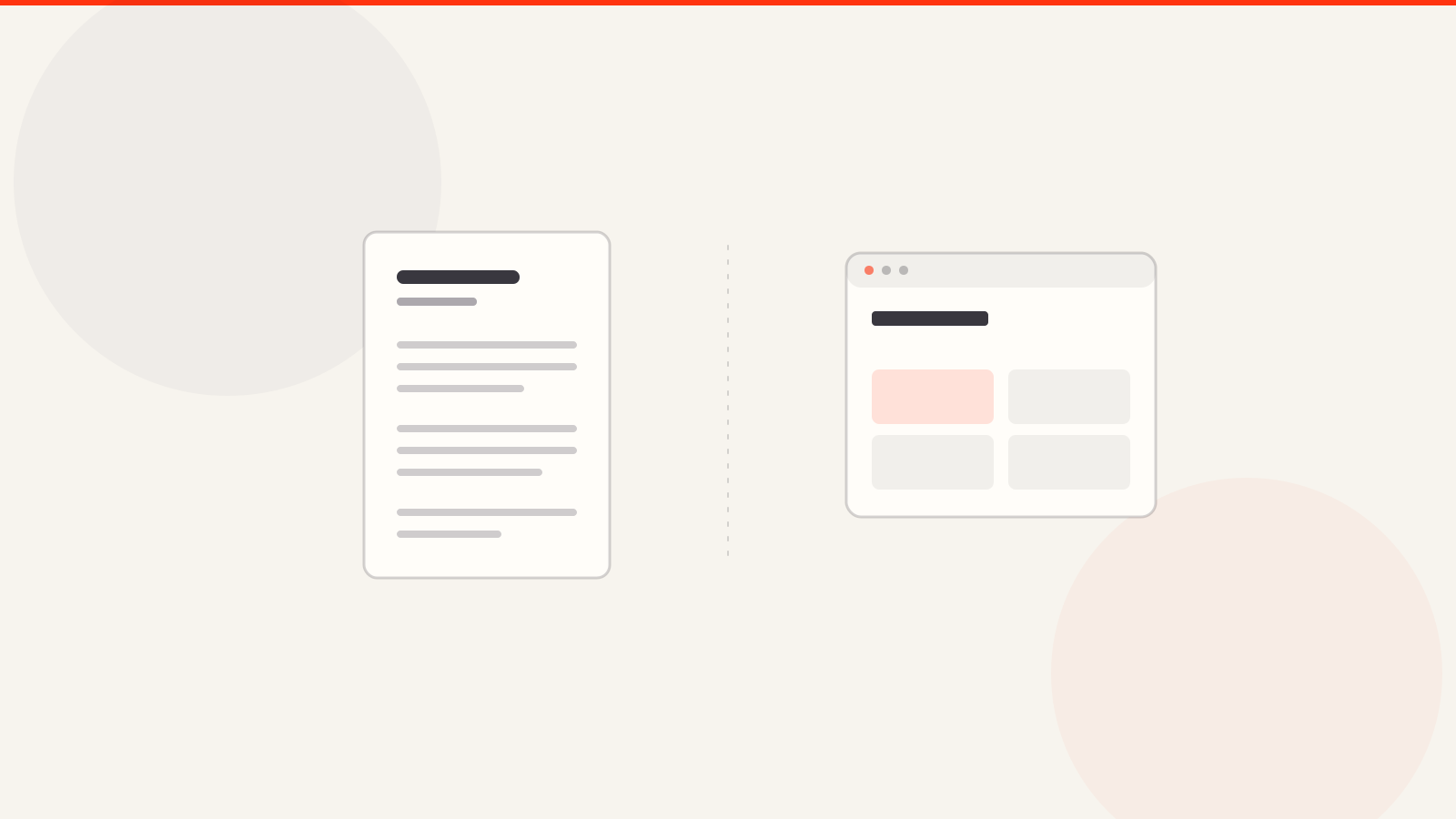
A portfolio builder turns selected projects into a published website. The tool supplies the design, page structure and hosting; you supply the work, your role in it and what changed as a result. Use one when your evidence needs showing or explaining. A resume alone is enough when an employer only needs dates, titles and skills.
A portfolio builder is a tool for arranging your projects, writing about your role, and publishing that work as a website. It supplies a design and editing interface; you supply the evidence. A useful portfolio explains what you made, why you made it, and what changed. It does more than repeat your resume.
What does a portfolio builder actually do?
| Part | What the tool provides | What you still need to decide |
|---|---|---|
| Design | Page layout, type and image placement | Which design suits your work |
| Projects | Fields or sections for projects | Your brief, contribution, decisions and result |
| Publishing | A shareable website address | Which work is public and when to update it |
Builders differ in how much control they give you. A general website builder such as Wix lets you arrange many kinds of pages. A focused portfolio builder starts closer to the final structure of a project page. Kickresume can make a personal site from resume information. ArcPixel lets you build a portfolio alongside a resume and cover letter, then edit each document for its own purpose.
A project page that gives a reviewer something to judge
Example project outline — replace every placeholder with your own facts
Project: [Name and one-sentence purpose]
Brief: [Who needed the work and what problem they had]
My role: [The decisions and tasks you personally owned]
Evidence: [A screen, sketch, photograph, code link or document]
Result: [What happened, or what you learned if no outcome was measured]
A student project is valid work when you label it honestly. For example, describe the class brief and show what you built. Do not turn a practice exercise into an invented client contract. See the guide to building a portfolio without client experience for examples.

When is a portfolio website useful?
- Use one when the work itself matters to selection: design, development, writing, photography and product roles often benefit from visible examples.
- Put a short, readable portfolio link on your resume when an application permits it. The resume gives the overview; selected projects provide evidence.
- Keep a PDF or offline copy when a recruiter asks for an attachment. A website link does not replace a required file.
Start with one strong project. Choose a portfolio template, add an accurate explanation and ask someone unfamiliar with the work what they understood after one minute. If they cannot identify your role, revise the page before adding more projects.
- Is a portfolio builder the same as a resume builder?
- No. A resume condenses experience for an application. A portfolio gives selected work enough room for context and evidence. See portfolio versus resume.
- Do I need coding skills?
- No for template-based tools. Coding can provide deeper control if you need a custom interaction or unusual structure.
- How many projects should I add?
- Start with the strongest one or two and expand when each new example adds different evidence.