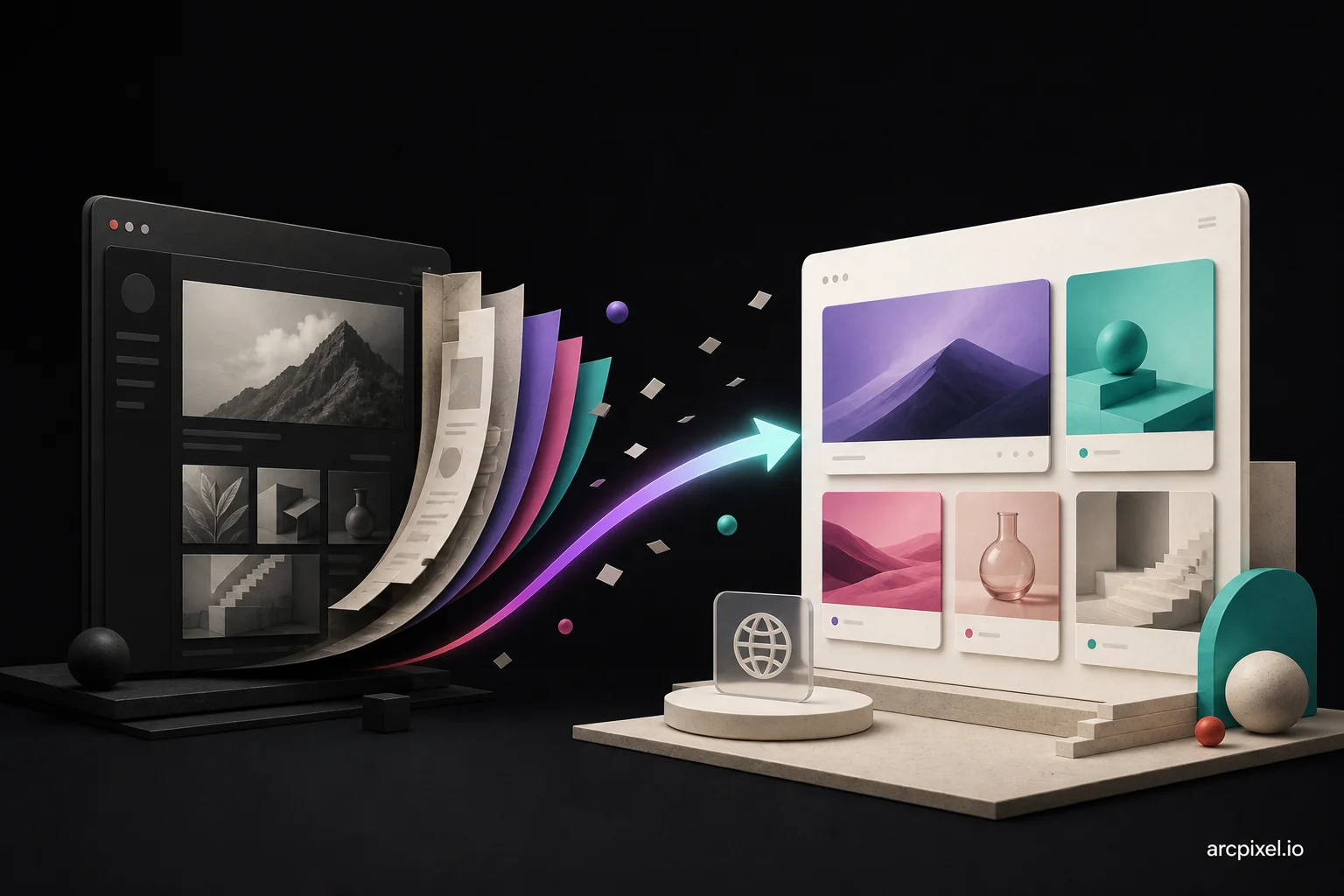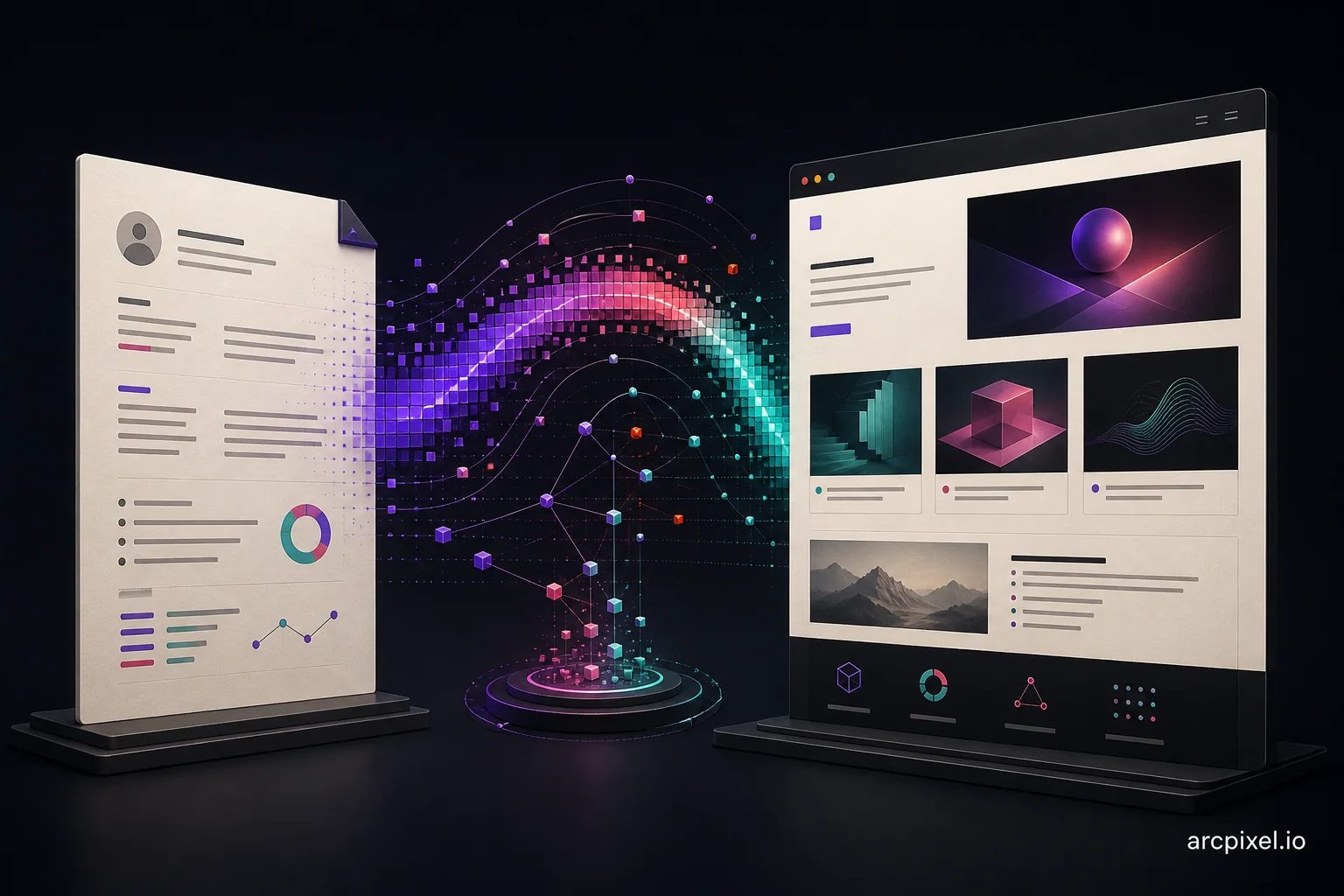
ArcPixel, Lovable, Wix and Zety start from different tasks. ArcPixel provides guided portfolio, CV and cover-letter editors. Lovable builds websites and applications from natural-language instructions. Wix supports broader website design and business features. Zety focuses on application documents. Choose the product whose starting point is closest to the output you need, then check its limits.
ArcPixel publishes this comparison and sells one of the products discussed. We reviewed the linked official product pages on 22 September 2026. This is a feature and workflow comparison, not a timed test or a claim about interview results. Features and regional offers can change; check the plan and checkout for your location.
| Your task | Shortlist | Check before choosing |
|---|---|---|
| A portfolio plus application documents | ArcPixel | Design fit, separate document edits and publishing cost |
| A custom site or application with unusual behavior | Lovable | Your ability to specify, review and maintain that behavior |
| A portfolio connected to a broader business website | Wix | The plan and features required for the whole site |
| A CV and letter for a particular vacancy | Zety or ArcPixel | Required export format, editing and paid-download terms |
ArcPixel vs Lovable: guided fields or custom software?
Lovable's documentation describes building software through natural language and retaining ownership of the code. That makes it relevant when the website itself is part of the work: for example, a developer demonstrating a custom interaction or a designer prototyping a tool. You need to explain the desired behavior and inspect the generated result.
ArcPixel starts with a narrower task. You import resume facts or fill in guided fields, select a portfolio design, review the content and publish. You do not need to design an application around your career history. This can suit an applicant who wants decisions about layout already made, while keeping control of the wording and selected projects.
For a custom interactive experience, the extra work in a flexible builder may be worthwhile. For a simple application portfolio, ask whether that extra interaction helps a reviewer understand your contribution. A technically ambitious page with unclear projects is still an unclear portfolio.
ArcPixel vs Wix: a focused portfolio or a wider website?
Wix's portfolio offering combines a work showcase with wider website and business functionality. Shortlist it when the same site must also support a business, such as selling work or taking bookings. Verify the specific plan for those features.
ArcPixel's case is simpler when your immediate output is an application portfolio with accompanying documents. You choose from the available designs instead of deciding how to arrange every part of a general website. Browse the actual portfolio templates first: a guided structure saves decisions only if that structure suits your work.
ArcPixel vs Zety: project evidence or document-first preparation?
Zety offers a resume builder and cover-letter tools, with PDF, Word and TXT downloads described on its product page. Its free offering lists TXT, while other download formats sit in paid plans. Check the offer shown in your region.
ArcPixel may be a better fit when a hiring manager also needs a project website. Zety belongs on the shortlist when the application document is the main deliverable. If you are comparing dedicated CV tools, read ArcPixel vs Resume.io as well. These tools overlap, but a professional profile link and a project case study do not necessarily present the same evidence.
Where ArcPixel can save decisions
| Decision | A focused workflow helps when… | You still need to… |
|---|---|---|
| Starting content | Your existing resume contains reliable names, roles and dates | Review imported fields and supply project evidence |
| Page structure | A ready-made design fits the work | Select, crop and explain the strongest projects |
| Writing | You need help expressing facts clearly | Delete invented claims and make the language your own |
| Submitting | You need a website, CV and letter | Check each separately and use the employer's required format |
Fewer setup decisions are a workflow characteristic, not a measured speed advantage. We have not established that ArcPixel generates faster, loads faster or finishes an application faster than these products. Use the same-task timing worksheet to compare the outcome that matters to you.
A brief you can use before opening any builder
Write your requirements first
Audience: [Hiring manager, client or collaborator]
Required outputs: [CV format, letter and/or website]
Evidence: [Two projects I have permission to share]
Must-have behavior: [Only what the reviewer actually needs]
Budget and maintenance: [Total cost and who updates the work]
Start with why a portfolio is useful if you are unsure whether you need a website. Once you have the brief, compare a real draft with the same content in your two preferred tools. Choose the result you can understand, correct and maintain.
- Is ArcPixel better than Lovable?
- For a guided career portfolio, ArcPixel starts closer to the application task. Lovable can be a better fit for custom software or interactions. This is a use-case judgment, not an overall product ranking.
- Does ArcPixel keep the CV and portfolio synchronized?
- No. Review changes in each document. The portfolio import is a starting point rather than an ongoing connection between every version.
- Should I learn JavaScript to build a portfolio?
- You do not need to write JavaScript for ArcPixel's guided editor. Custom code can be useful when demonstrating development work, but the quality of the project explanation matters whichever tool you use.